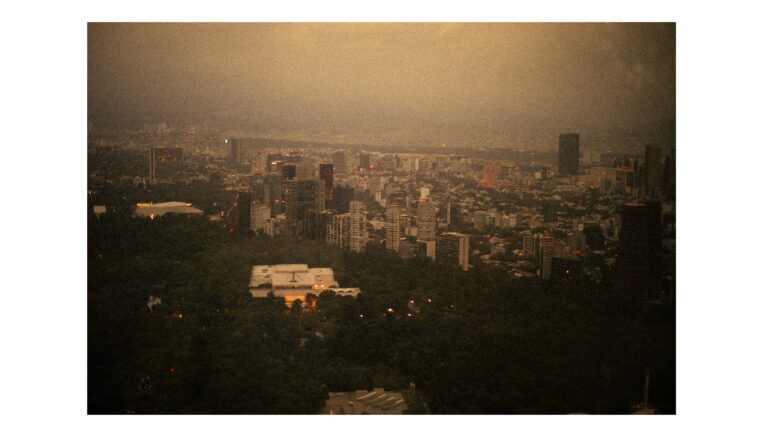
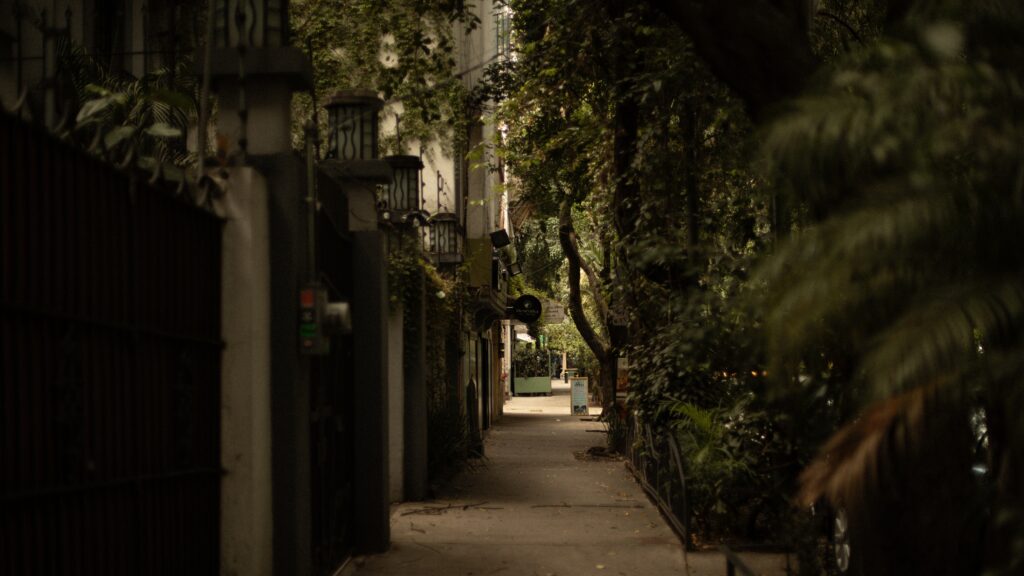
Five places. Five completely different reasons to go.
We don’t choose our favorites based on stars, price points, or how difficult it is to get a table. We choose the places we remember.
Sometimes it’s the food. Sometimes it’s the architecture, the music, the people, or a view that makes you stop what you’re doing. And sometimes, it’s difficult to explain until you’ve been there yourself.
Through our travels and visits to Mexico City, we’ve experienced the city through its restaurants, cafés, neighborhoods, architecture, and hospitality. What we’ve learned is that a memorable experience doesn’t have to fit into one category. It doesn’t have to be fine dining. It doesn’t have to be the newest opening or the hardest reservation to get. It just has to give you a reason to remember being there.
None of the five places on this list are alike. That’s exactly why we chose them.
TÜT — The Setting
Marmota — The Kitchen
Botánico — The Harmony
Choza — The Experience
Balcón del Zócalo — The View
These aren’t rankings, and we’re not trying to define the best restaurants in Mexico City. They’re five places that stayed with us, each for a completely different reason.
There are places that immediately remind you exactly where you are. TÜT was one of those places for us.
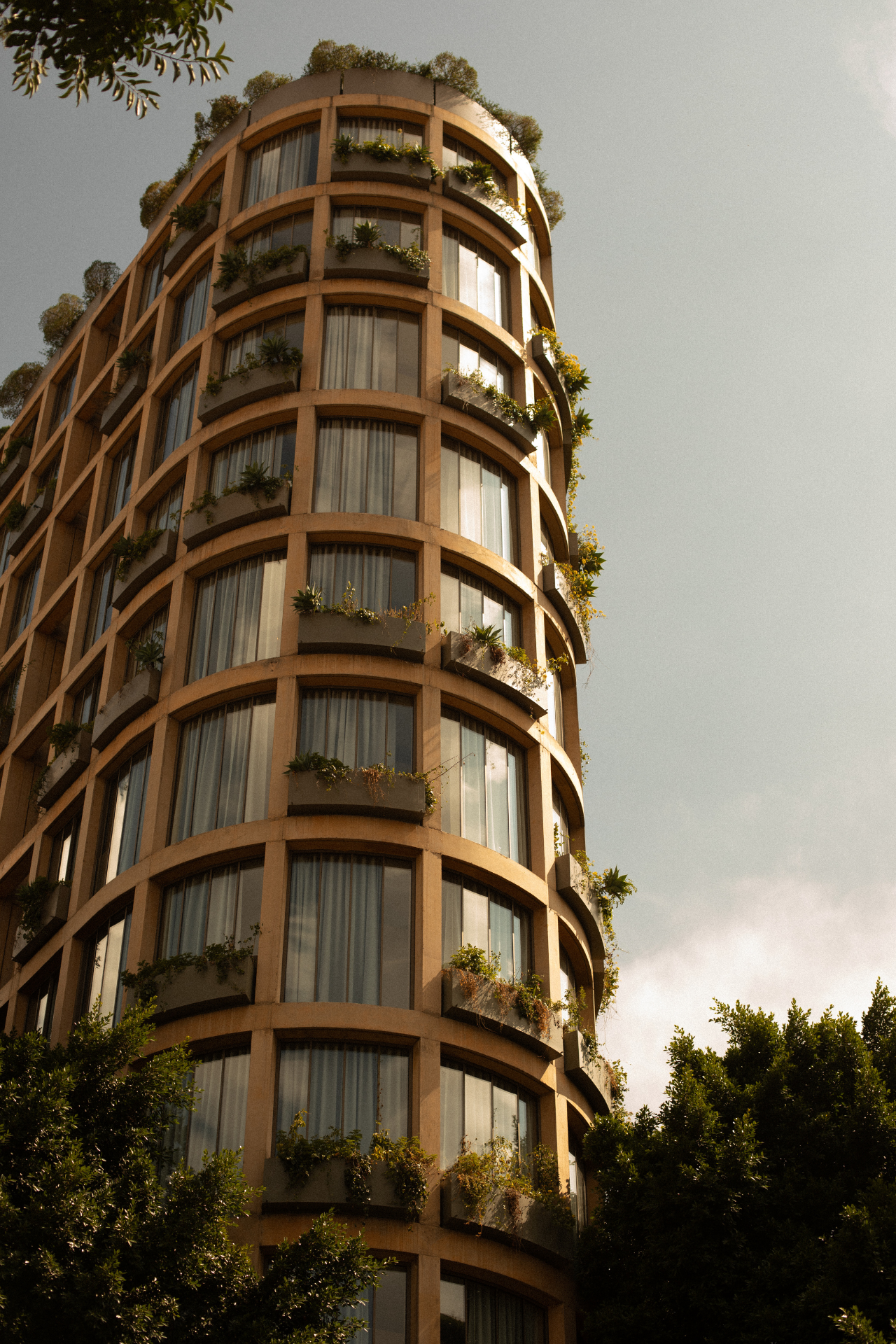
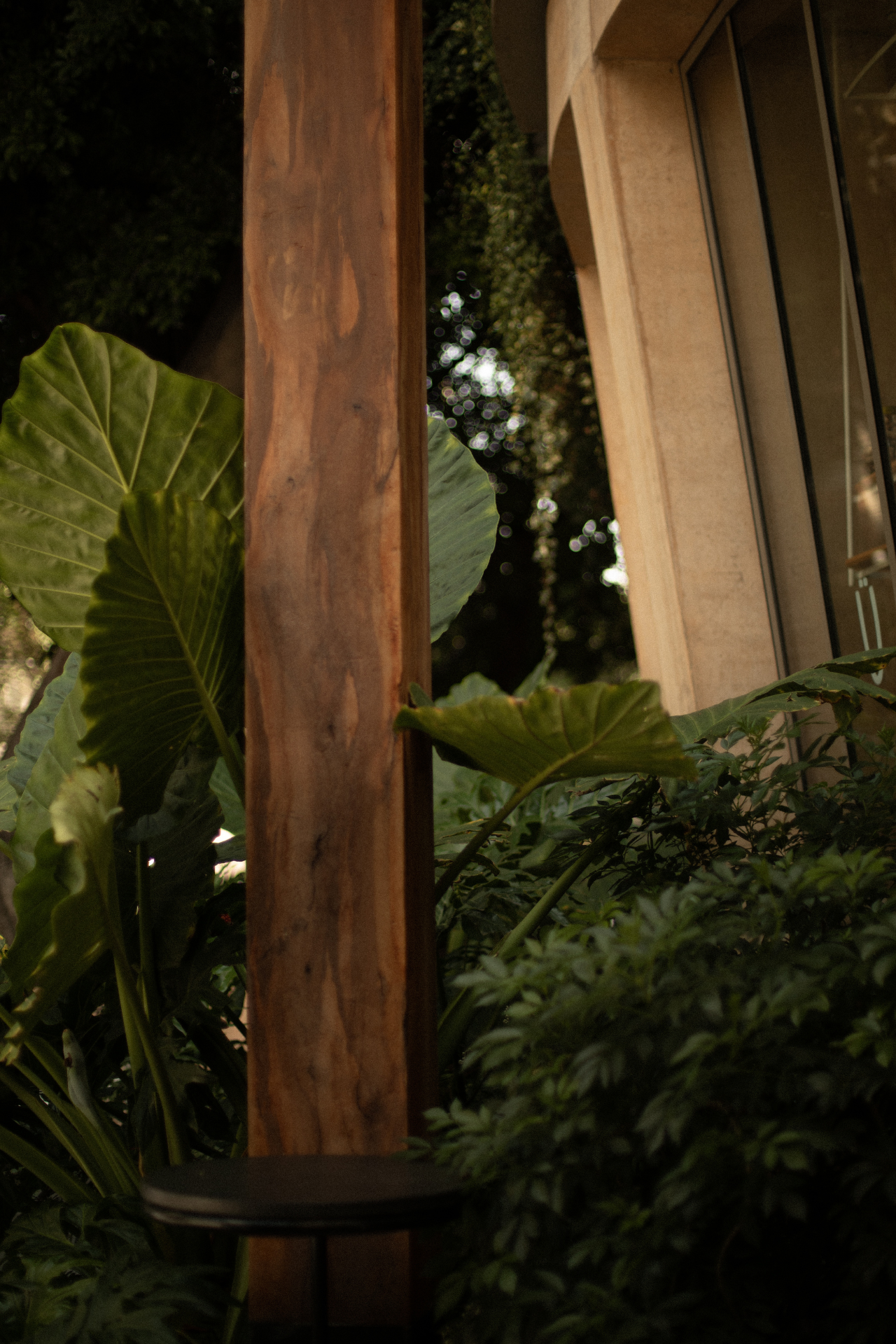
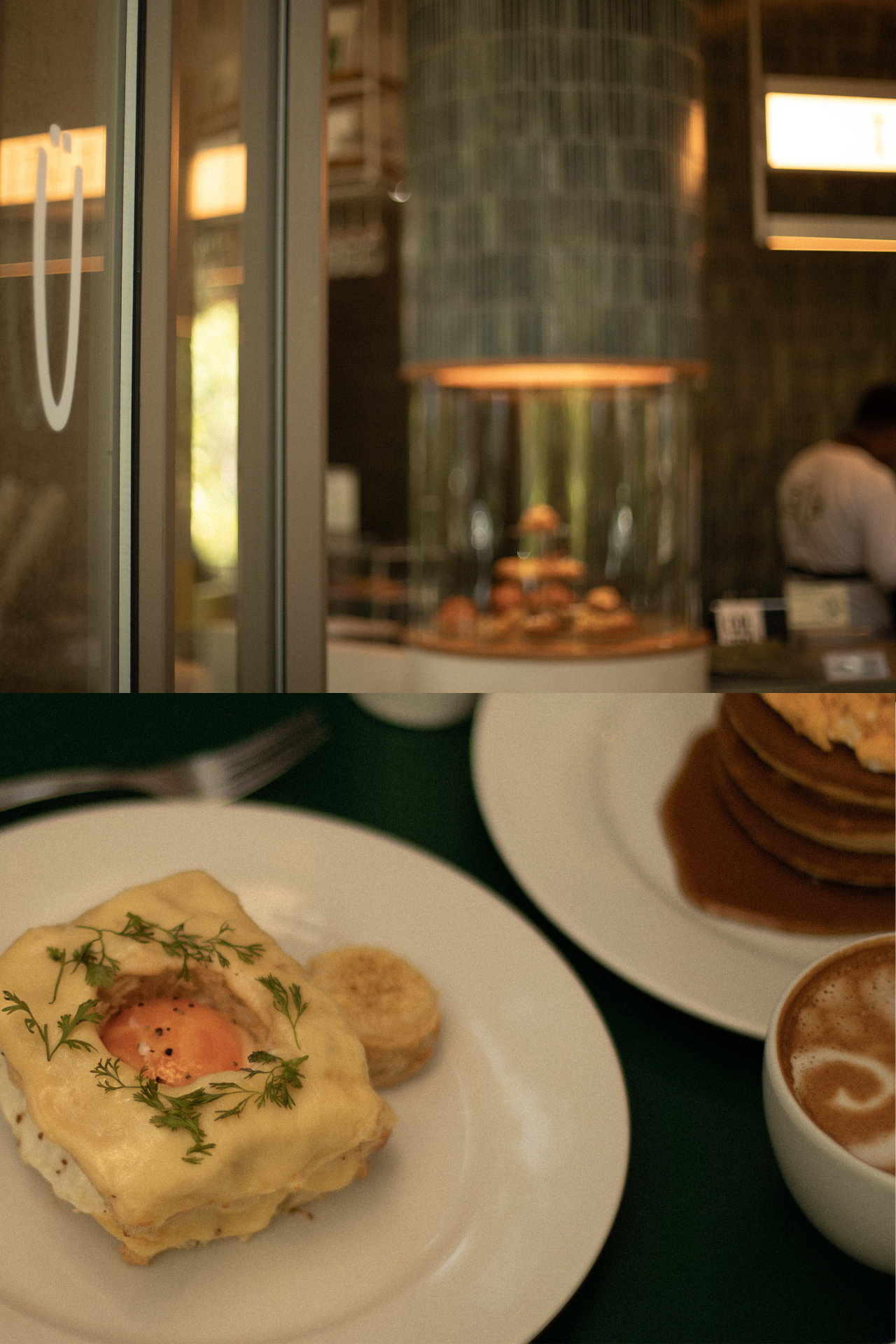
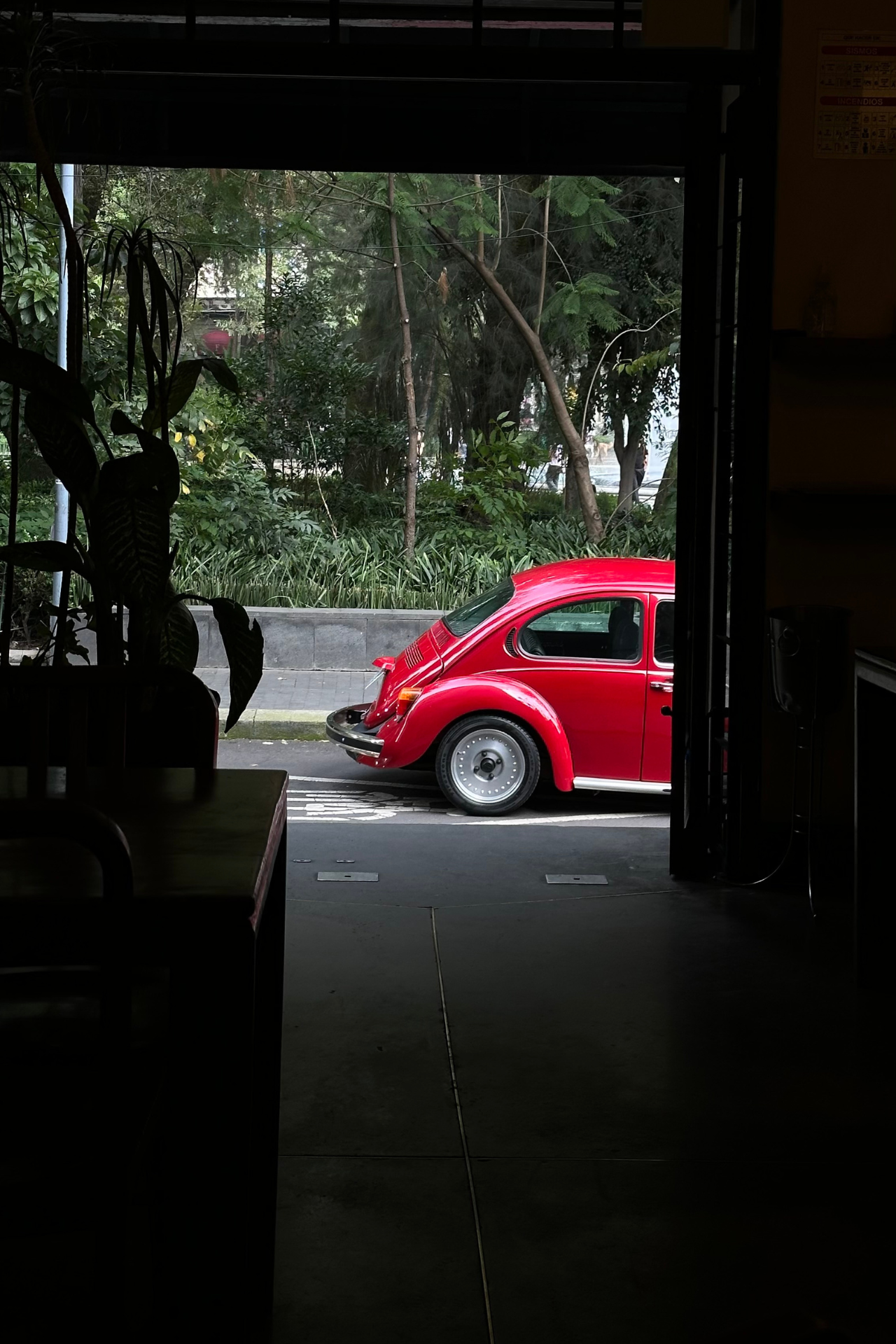
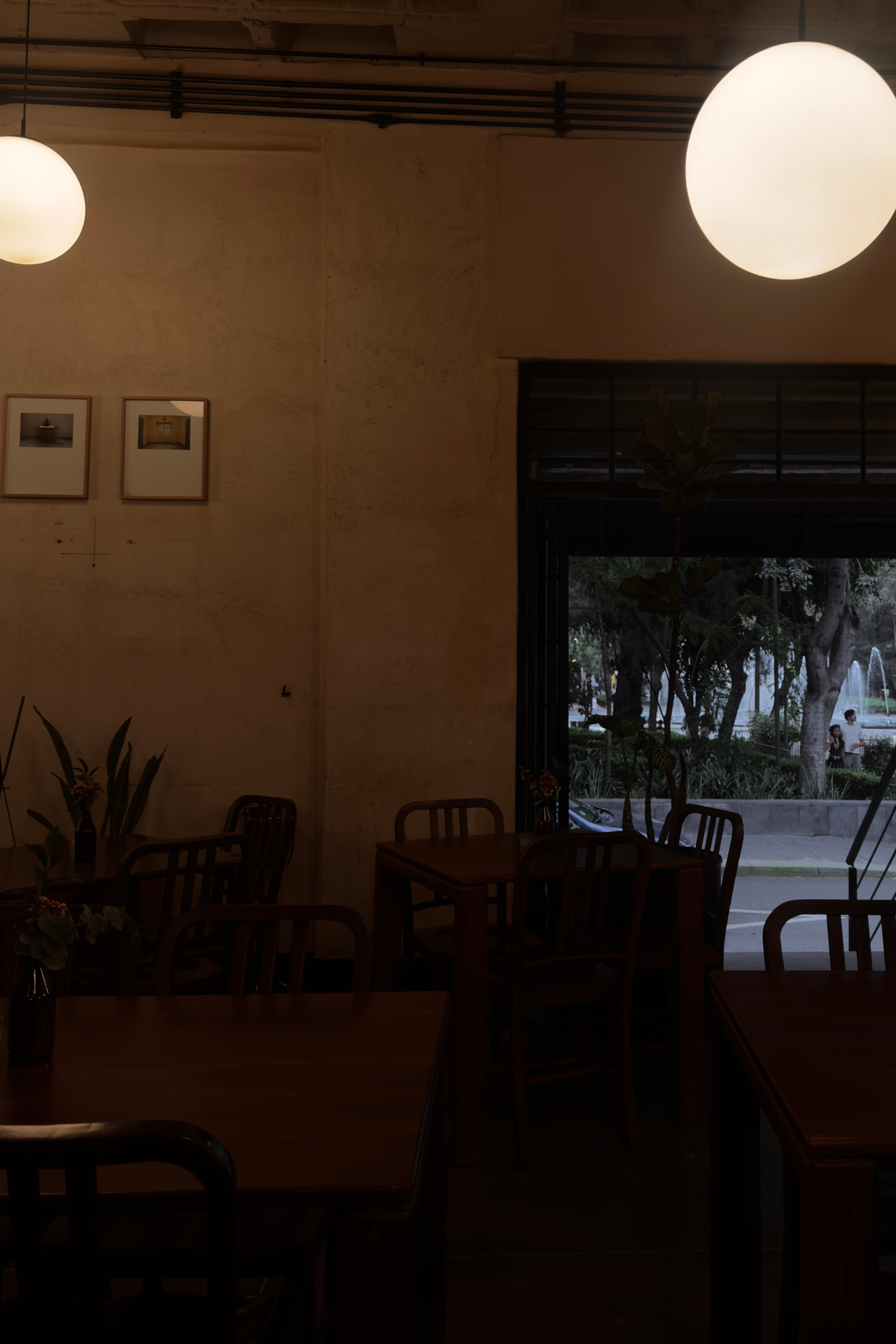
Surrounded by concrete, greenery, natural light, and striking architecture, TÜT became one of our favorite places to simply sit and take in Mexico City. You can choose a table indoors or outside, order a coffee, and stay awhile.
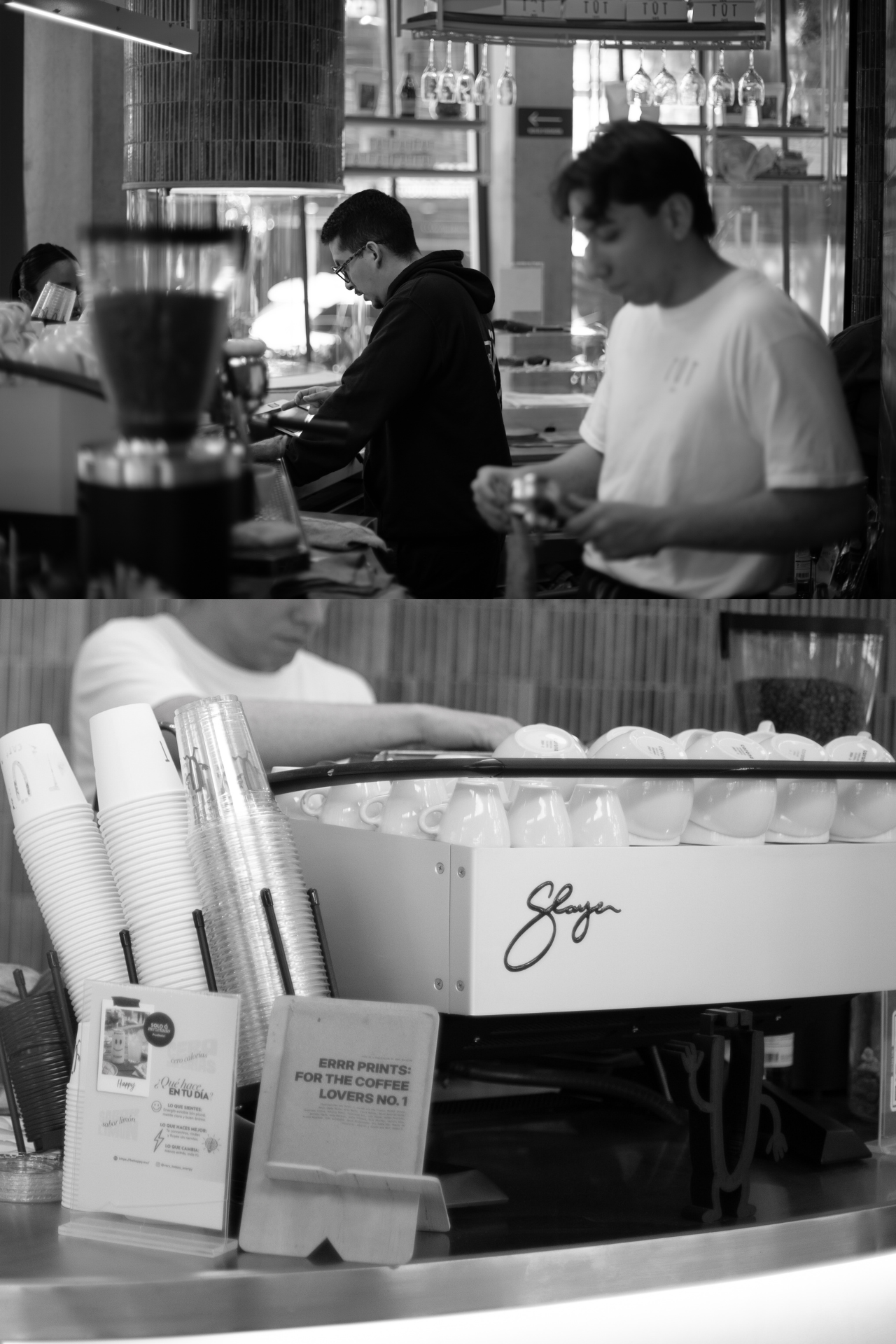
TÜT is an all-day brunch concept centered around specialty coffee, fresh baking, and creating a space that encourages people to slow down rather than rush through their visit. Its contemporary environment combines raw architectural materials with greenery and an indoor-outdoor flow that feels particularly natural in Mexico City.
That same feeling of comfort carries into the food. Bread and pastries are made in-house, coffee is an important part of the experience, and brunch is served throughout the day.
But you don’t necessarily need to know any of that to enjoy it.
We loved the food. We loved the coffee. We loved that they make their own bread. But mostly, we loved how it felt to sit there. It feels like a pause from the city while still somehow making you feel completely inside it.
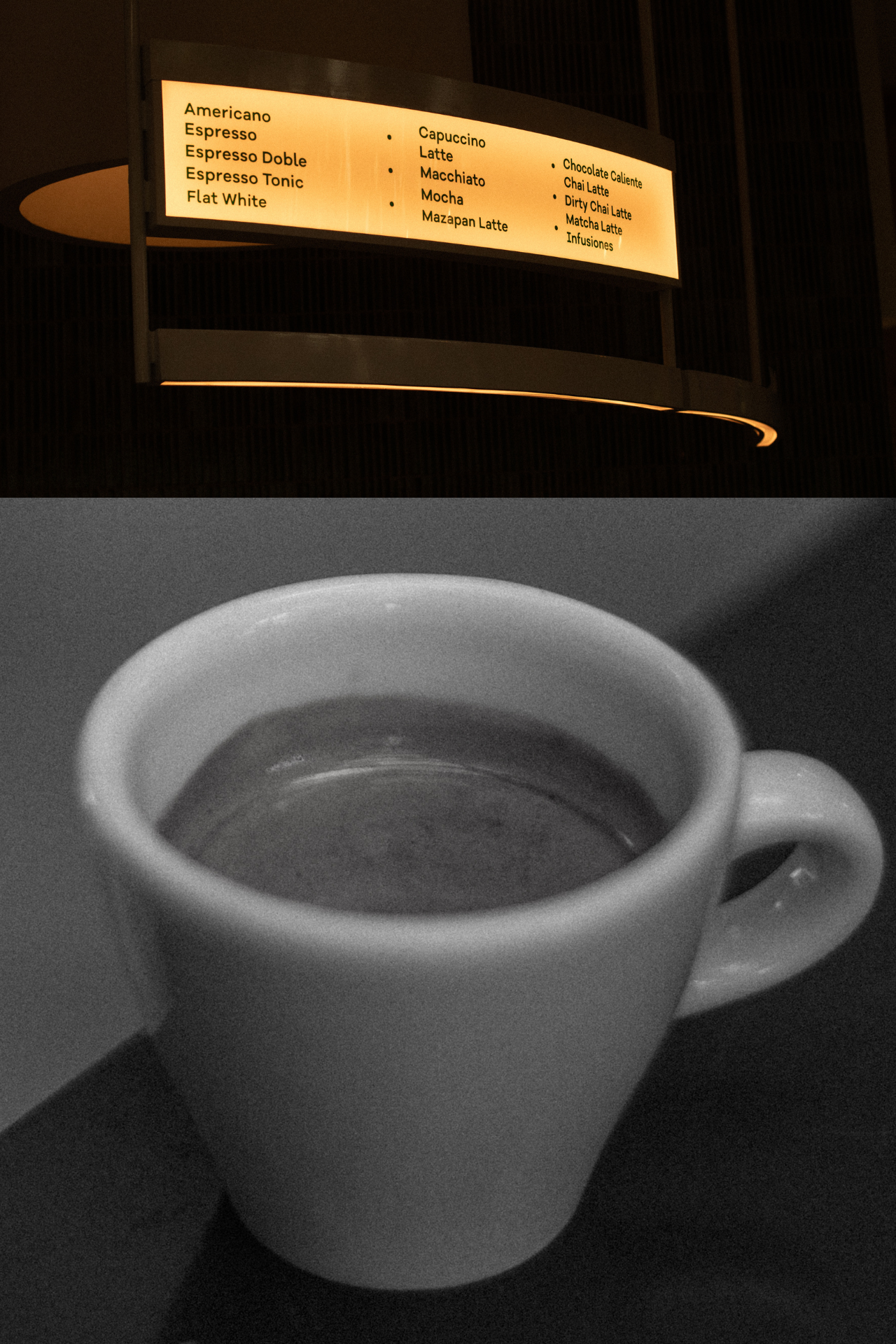
What we ordered: The Croque Monster, made with TÜT’s house-made bread, was the standout. We paired it with an espresso—simple, but sometimes that’s the best way to know whether a café takes its coffee seriously. This one does.
What we remember: Looking around over coffee and thinking, this feels like Mexico City.
Go for: A slow morning, good coffee, architecture, and somewhere you actually want to stay awhile.
At Marmota, we couldn’t stop watching the kitchen.
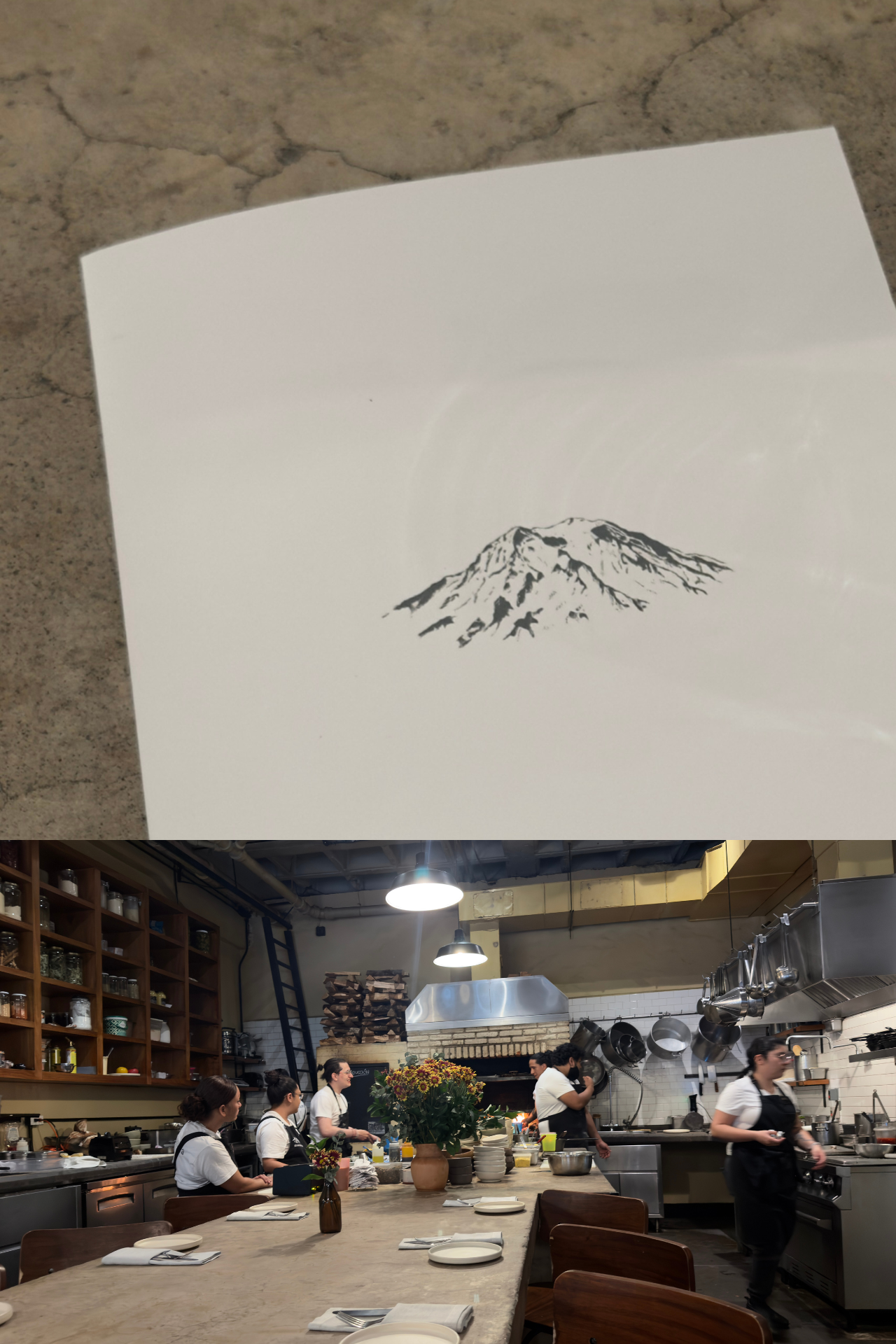
An exposed kitchen and wood-burning hearth sit at the center of the experience, removing the usual separation between the people preparing dinner and the people eating it. A communal table and the open layout bring guests even closer to that process.
And once you taste the food, you understand why the kitchen deserves to be seen.
Marmota was created by chefs Federico Patiño and Poppy Powell, whose time cooking in the Pacific Northwest influenced a philosophy centered around seasonality, producers, seafood, fermentation, and cooking over fire. Their approach brings that Pacific Northwest sensibility into Mexico City.
The architecture reinforces it through raw materials and the constant presence of the hearth. The kitchen isn’t hidden backstage; the preparation, movement, and fire become part of dinner.
But what mattered to us wasn’t knowing every detail behind the menu.
You could taste the thought behind it.
The ingredients felt intentional. The preparation felt intentional. Even the decision to leave the kitchen exposed felt connected to the way the food was being made.
Nothing felt unnecessarily complicated. Marmota manages to feel thoughtful and incredibly well executed without becoming stiff or overly formal.
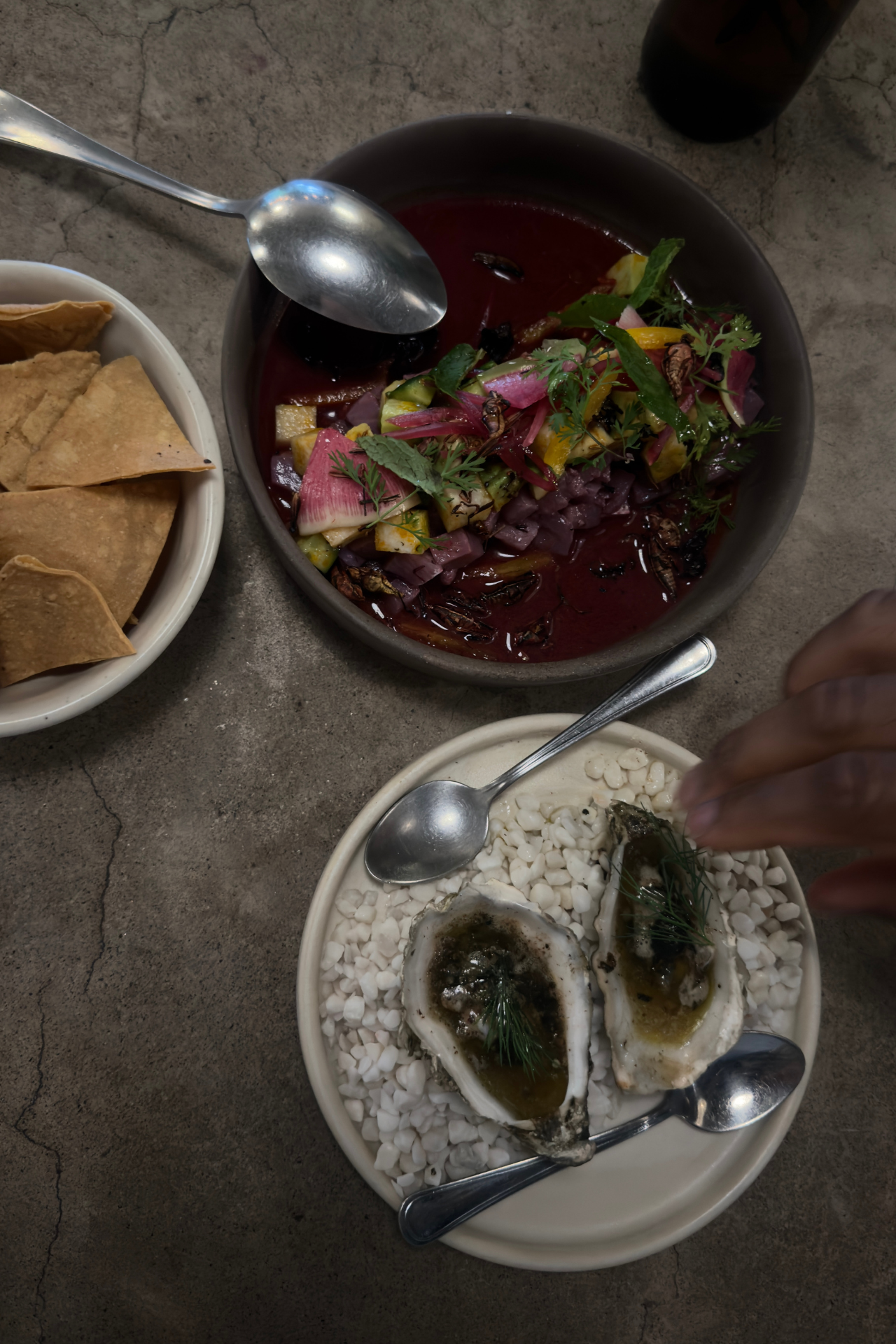
What we ordered: The grilled cheese is a staple for a reason, and the oysters were another favorite. But the ceviche was one of the dishes that stayed with us most. Fresh fish was paired with crickets, adding an unexpected crunch that worked beautifully against the freshness of the ceviche. We accompanied everything with selections from Marmota’s thoughtfully curated wine program, which highlights producers and winemakers alongside the same sourcing philosophy found in the food.
What we remember: Watching dinner being made only feet away from us.
Go for: The open kitchen, fire-driven cooking, great wine, and a meal where the process matters almost as much as the plate.
Botánico was one of the few places where we couldn’t choose between the food and the setting.
Because neither feels separate from the other.
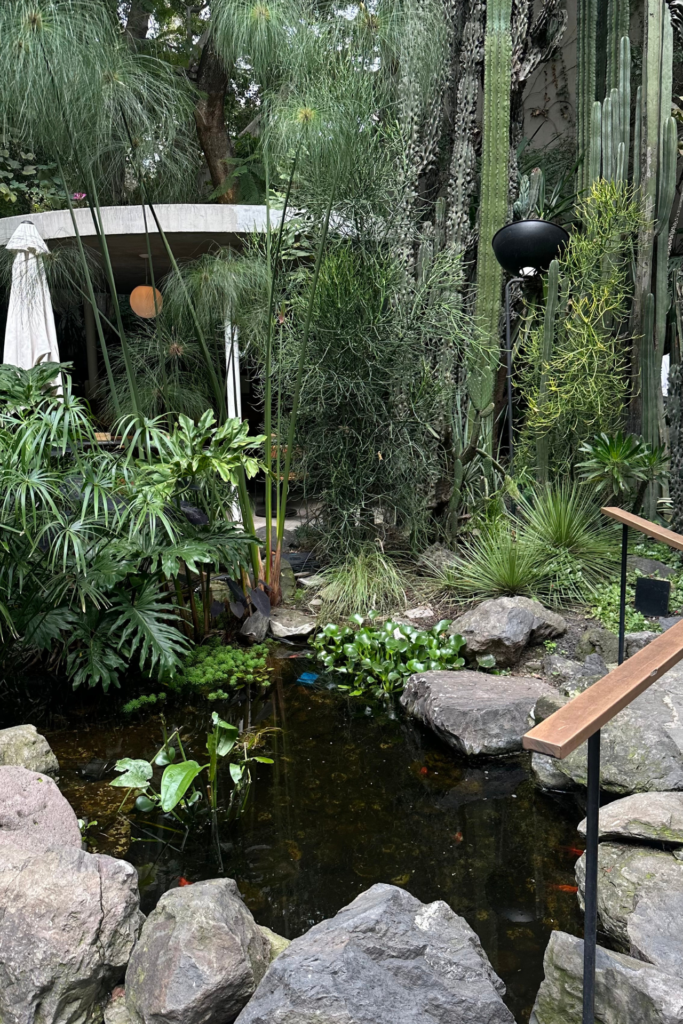
You walk into a lush courtyard filled with towering cacti, mature plants, and a pond where you’ll even find axolotls. The outdoor space functions almost like the main dining room, creating a feeling of escaping into a garden while remaining in the middle of Mexico City.
And then the food arrives.
Botánico’s menu is seasonal and ingredient-driven, with chefs Alejandra Navarro and Ernesto Hernández behind the concept. Navarro’s background includes time at Quintonil, and that experience carries into a philosophy where freshness, sourcing, and allowing ingredients to speak for themselves remain central.
Botánico has also received recognition from the Michelin Guide and World’s 50 Best Discovery.
But the accolades aren’t why it’s here.
The food was exceptional. The architecture was beautiful. The garden was beautiful. The atmosphere was beautiful. The service matched everything happening around it.
Even the axolotls—such a small detail compared with the scale of the garden—became one of the things we remembered most.
What impressed us was that nothing overshadowed anything else. The design wasn’t compensating for the food. The food wasn’t compensating for the setting. The garden wasn’t simply there to make the restaurant photograph well.
Everything seemed to elevate everything else.
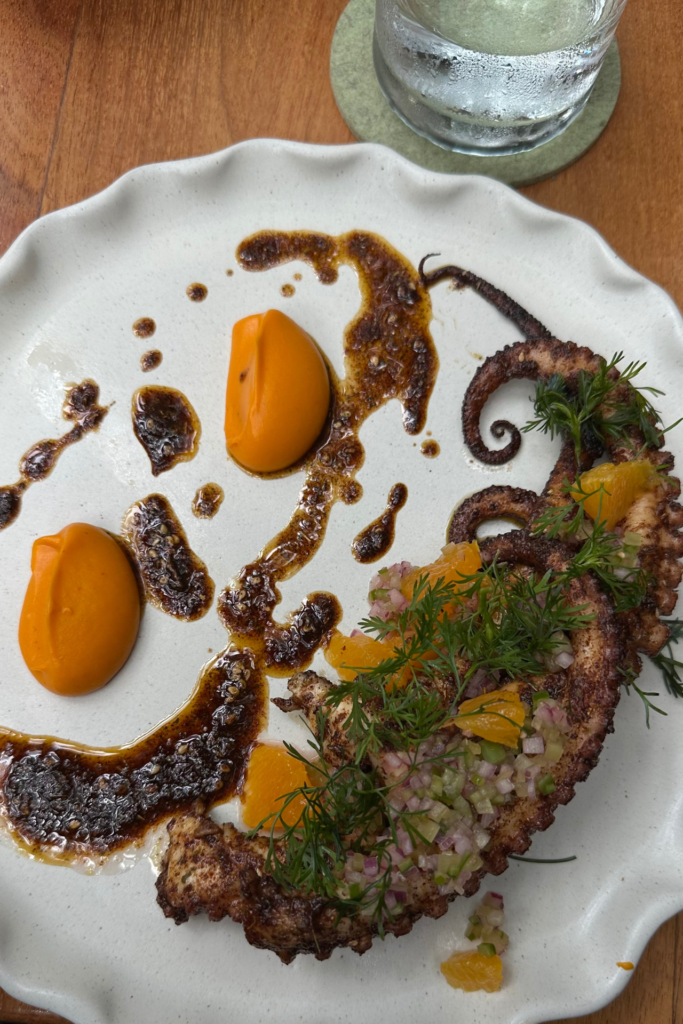
What we ordered: The grilled octopus was our favorite. Beyond the flavor and execution, even its presentation felt completely at home in Botánico. The plate, the garden, the architecture, and the atmosphere seemed to belong to the same visual language.
For us, Botánico was a 10/10 experience and easily one of our favorite fine-dining experiences.
What we remember: Looking around the table, then around the garden, and realizing there wasn’t one part of the experience we would have changed.
Go for: A long lunch or dinner when you want the food, architecture, nature, and ambiance to matter equally.
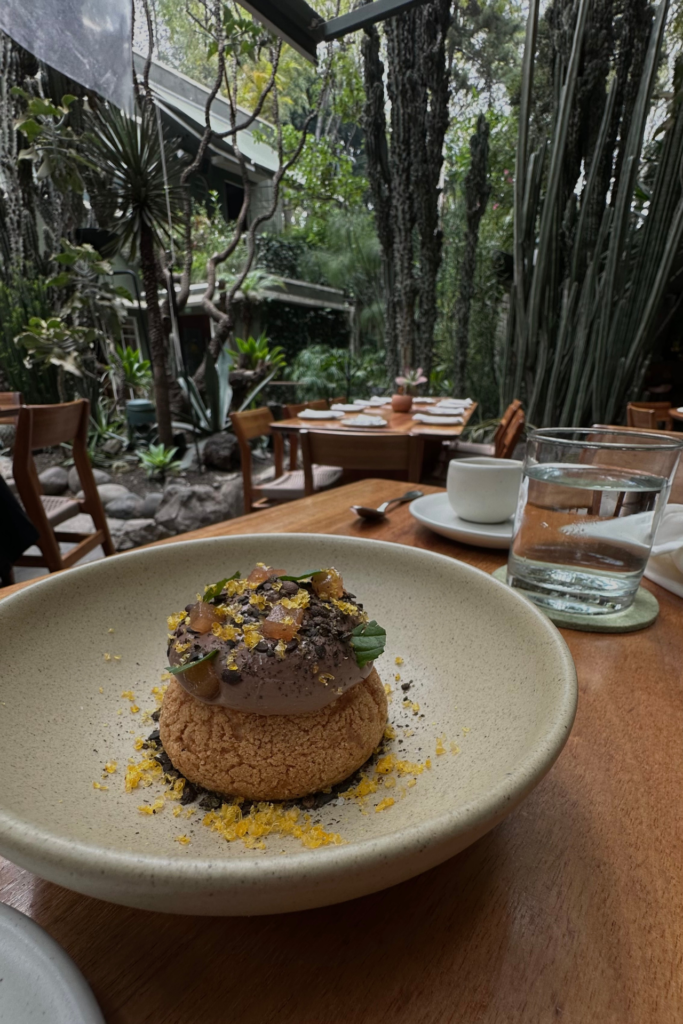
Don’t go to Choza expecting a traditional dinner.
That’s the point.
Our experience started before we ever reached our table. We were first taken into the listening room, grabbed a drink, listened to music, and waited.
Eventually, dinner became the next part of the night.
Choza deliberately moves away from the expectations of a conventional restaurant. Even the name translates to “shack” or “hut,” reflecting a raw, unpretentious identity built around food, drinks, music, fire, and sound rather than traditional fine-dining structure.
The kitchen pulls heavily from Thai influence while crossing into Mexican and other cultural references. Wood fire, high-heat woks, handmade curry and chile pastes, smoke, spice, and intense flavors form the backbone of the menu.
The flavors were unlike anything else we experienced during the trip.
Then there’s the music.
The listening component isn’t background entertainment. Sound and vinyl are part of the identity of the space. It creates an experience where getting a drink, waiting, listening to music, moving into dinner, sharing food, and watching the fire all feel like chapters of the same night.
Choza is also walk-in driven rather than built around a traditional reservation system. You arrive, you wait, you have a drink, you listen, and eventually you eat.
Normally, those extra steps could feel inconvenient.
Here, they felt like part of the experience.
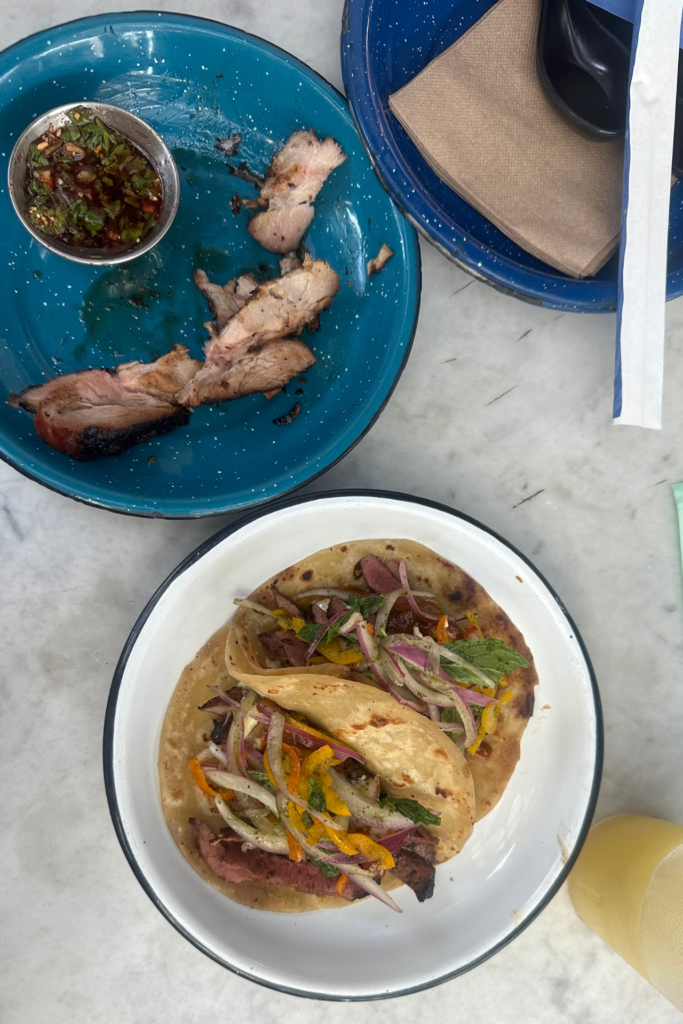
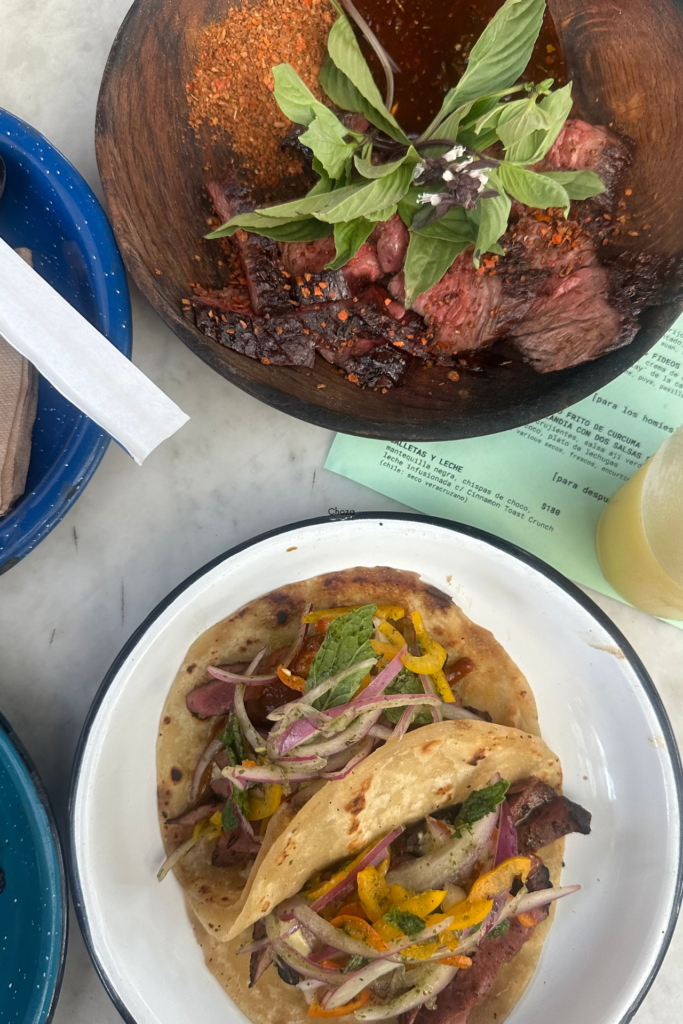
What we ordered: Choza is made for trying a little bit of everything, with plenty of small plates to share, so that’s exactly what we did. The stars of the night were the wood-fired pork and fried rice—bold, smoky, intense flavors that made complete sense in a restaurant built around fire and experimentation.
It’s culture, flavor, music, architecture, and hospitality happening together.
Not polished for the sake of appearing luxurious. Not conventional for the sake of being easy.
Just memorable.
Choza reminds you that hospitality doesn’t have to look expensive to feel intentional.
What we remember: Getting a drink in the listening room and realizing dinner had already started—we just weren’t at the table yet.
Go for: A night when you don’t want dinner to feel like just dinner.
If it’s your first time in Mexico City, we’d start here.
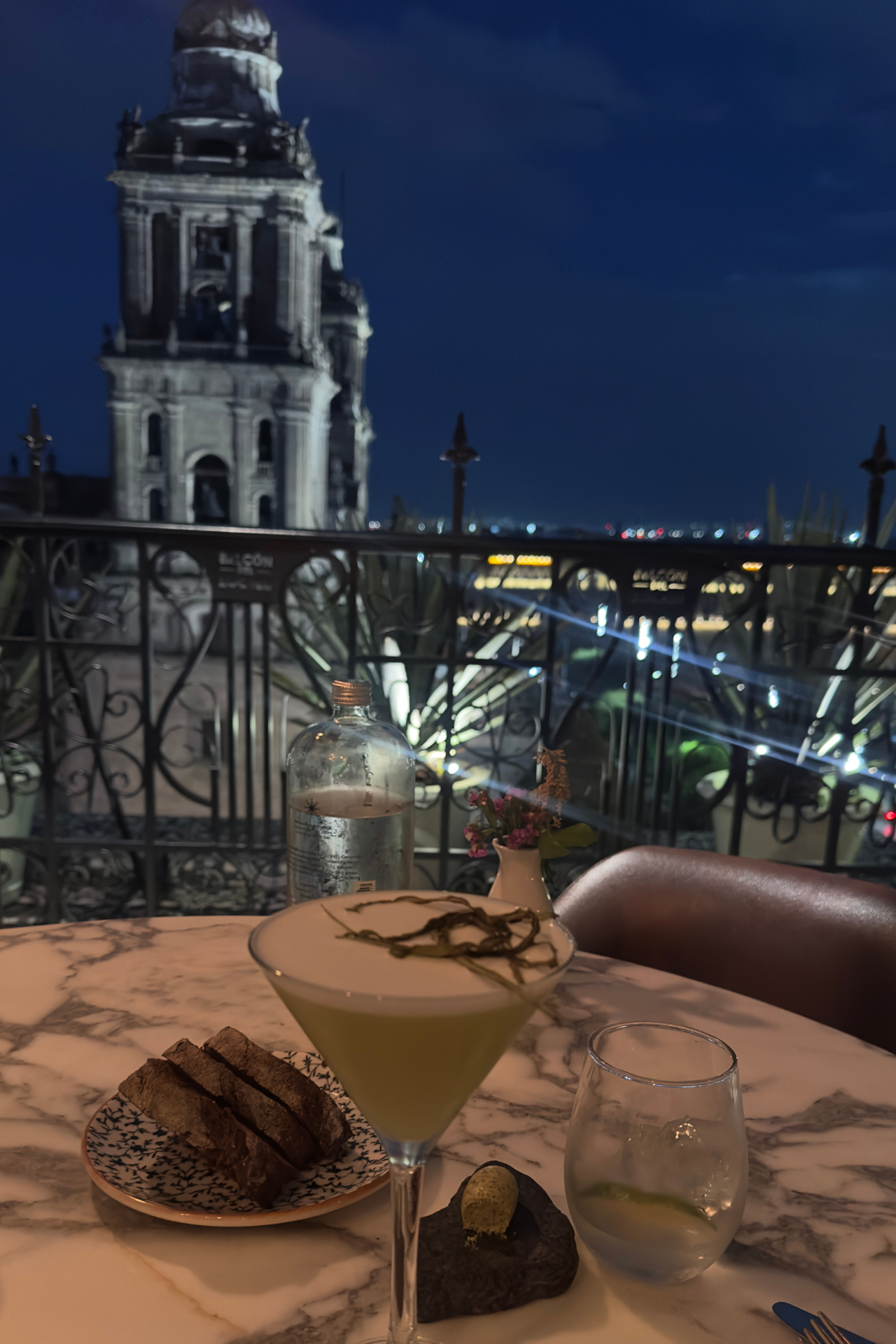
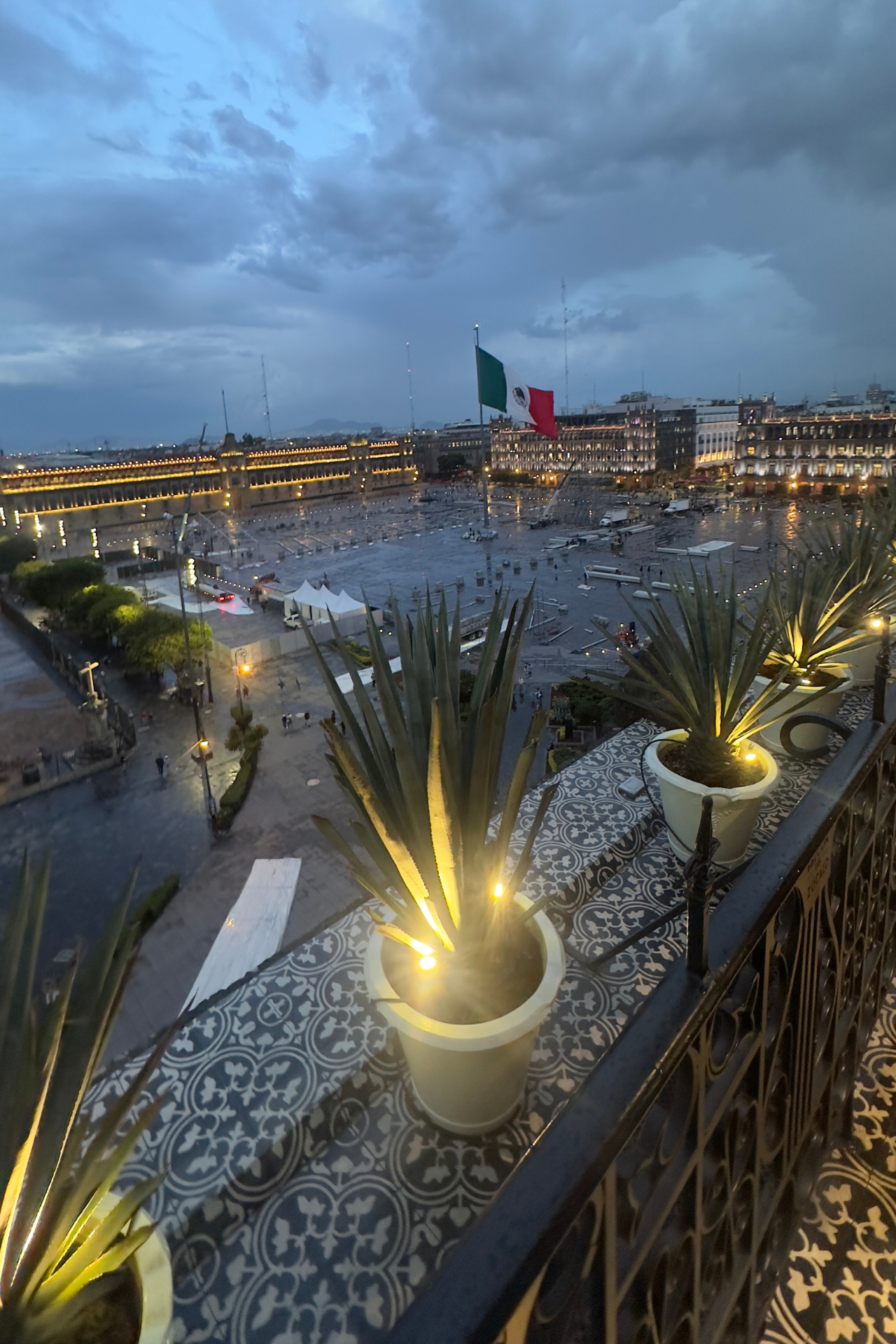
There is something different about seeing the Zócalo from above.
The Metropolitan Cathedral, historic architecture, movement of the plaza, and sheer scale of the Centro Histórico unfold directly in front of you.
It’s one of those views that doesn’t need much explanation.
Balcón del Zócalo sits in the historic center and is led by executive chef José Antonio “Pepe” Salinas. The restaurant approaches Mexican gastronomy through a contemporary fine-dining lens, using modern techniques while keeping Mexican ingredients, traditions, and hospitality at the center of the concept.
And importantly, we wouldn’t recommend it solely for the location.
The food delivered.
The flavors were beautiful, the presentation felt considered, and the cocktails were some of the best we had in the city. The restaurant also continually refreshes its menu, making the culinary experience more than a backdrop to the view.
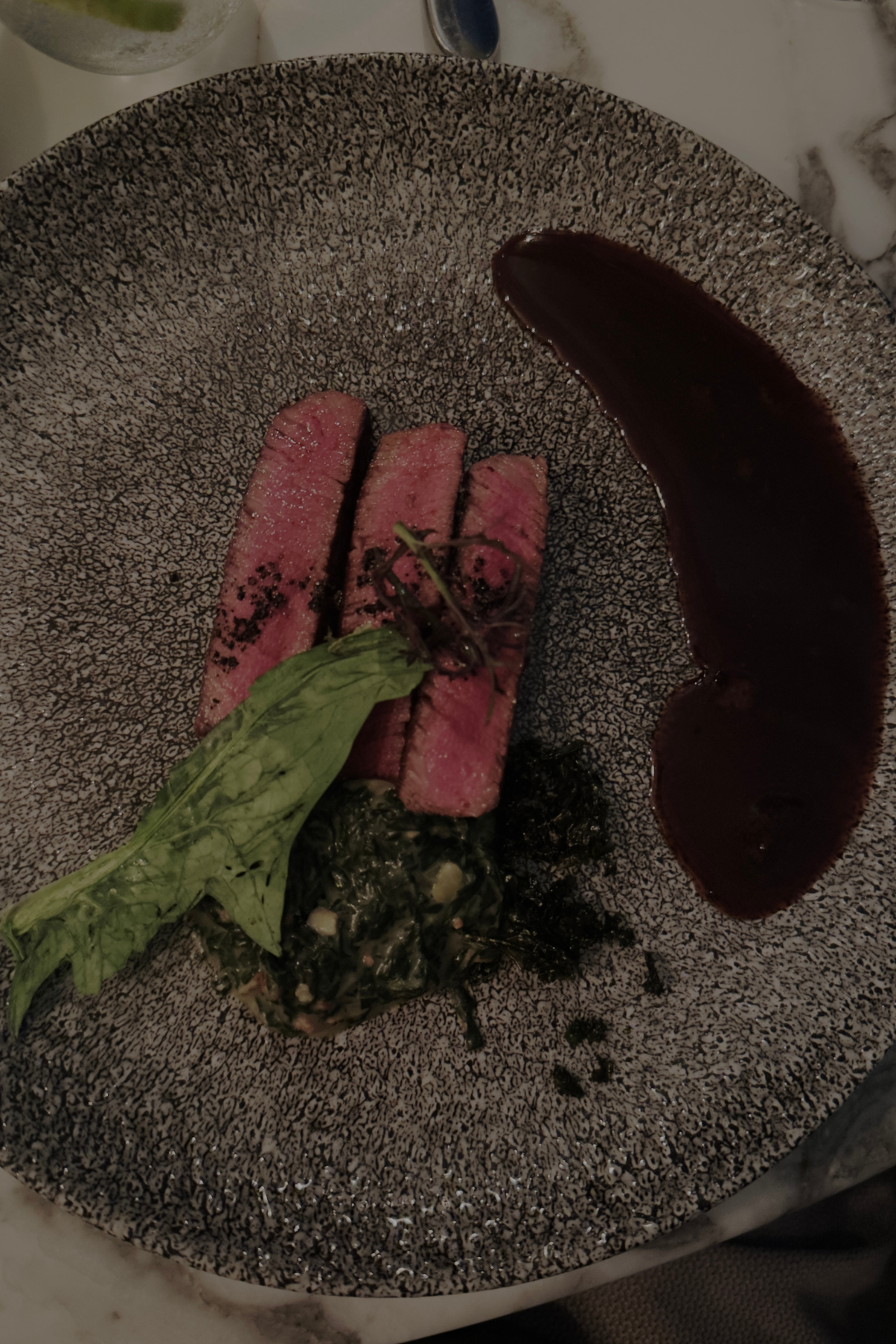
What we ordered: We experienced Balcón through a set-course menu, which gave us a broader look at the kitchen’s approach. The highlight was the duck mole—a dish that stayed with us well beyond the meal. Pair that with the cocktails and the view, and the experience becomes much more than a rooftop dinner.
Its relationship with the Centro Histórico adds another layer. From the dining room, you’re facing one of the most historically significant areas of the country, with the Metropolitan Cathedral directly in view and layers of Mexico City’s history surrounding you.
There are restaurants where you could almost forget what city you’re visiting.
This isn’t one of them.
And that’s exactly why we think it’s ideal for someone experiencing CDMX for the first time.
What we remember: Looking out over the Zócalo and taking in the scale of Mexico City from above.
Go for: Your first visit to CDMX, the view, some of our favorite cocktails, and a dining experience that goes well beyond what you’d expect from a restaurant known for its location.
Five places made this list for five completely different reasons.
TÜT for the setting.
Marmota for the kitchen.
Botánico for the harmony.
Choza for the experience.
Balcón del Zócalo for the view.
None needed to provide the same kind of hospitality to become a favorite.
That’s something Mexico City reminded us of again and again.
A memorable experience doesn’t have to mean white tablecloths or fine dining.
It can be sitting beside an open kitchen watching something hit the fire. Finding an axolotl tucked inside a restaurant garden. Drinking in a listening room while waiting for your table. Having coffee somewhere that makes you slow down for a second. Or looking over one of the most recognizable plazas in Mexico and realizing how much history is happening directly beneath you.
Some of the places we love will be Michelin-recognized restaurants. Others might be cafés, neighborhood bars, hotels, bakeries, or somewhere we happened to walk into without knowing exactly what to expect.
The common denominator isn’t luxury.
It’s having a reason to remember being there.
For us, great hospitality ultimately comes down to how a place makes you feel—and whether some part of that experience stays with you after you’ve left.
These five, we remember.
PO Studios’ Favorites is an ongoing editorial series documenting the places we remember through travel—from restaurants and cafés to bars, hotels, and spaces that don’t always fit neatly into one category.
No rankings. No requirement for luxury.
Just a reason to go.
PO Studios Editorial — Mexico City